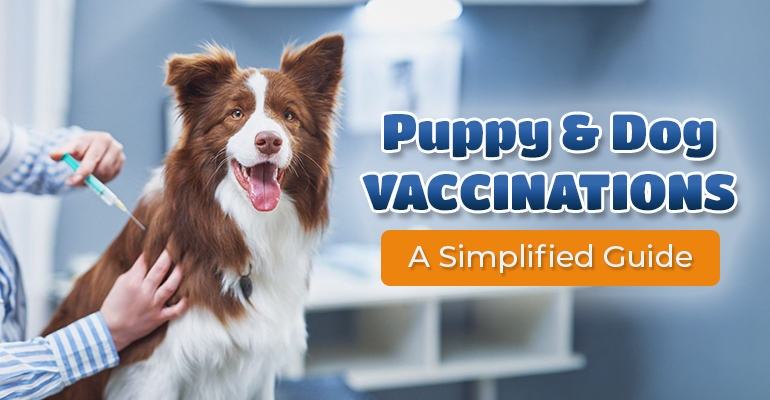
Puppy & Dog Vaccinations – A Simplified Guide
Welcoming a new puppy or dog home is all fun and cuddles until you hear the word “vaccination” at your first vet visit. Suddenly, the journey starts feeling serious and full of responsibilities. If you’re a new dog parent (or even if you’ve had a dog before), figuring out puppy and dog vaccinations can feel confusing, overwhelming, and stressful. But here’s the good news: it’s much simpler than it sounds.
In this blog, we’ve explained what vaccines your dog may need, when they’re given, and how they help protect your dog’s health.
What Do Vaccines Actually Do?
Think of vaccines as your dog’s “trial round” to fight various diseases. Instead of waiting for a dangerous disease to show up, vaccines introduce a weaker version of the disease-causing pathogen into your dog’s body, so your dog’s immune system can learn how to fight it. So, what if the real thing ever shows up? Your dog’s body already remembers the immune response and knows how to fight it off.
This is exactly what makes vaccinations crucial for dogs. Skipping vaccines can lead to serious and sometimes fatal diseases. Furthermore, some diseases (like rabies) can affect humans too. Vaccines also save you from insanely expensive treatments later. Prevention is always cheaper and less stressful than dealing with a sick pet.
Core and Non-Core Vaccines: What Vaccines Does Your Dog Need?
When it comes to dog and puppy vaccinations, there are two main types of vaccines that you need to know about: core vaccines and non-core vaccines.
- Core vaccines are the non-negotiables. Every dog needs them, no matter their lifestyle or geographical location. They protect against major diseases like parvovirus, distemper, and rabies.
- Non-core vaccines, also known as lifestyle vaccines, are optional vaccines that depend on your dog’s health risks. For example, if your dog goes to parks or boarding facilities, they might need extra protection against kennel cough or canine flu.
Most pet parents get confused between core and non-core vaccines, but remember this simple thing:
- Core vaccines = mandatory vaccines (recommended for all dogs)
- Non-core vaccines = vaccines based on your dog’s social life
Take a look at how a typical core vaccination schedule and non-core dog vaccination schedule look like in the tables below to learn which vaccines dogs need and when:
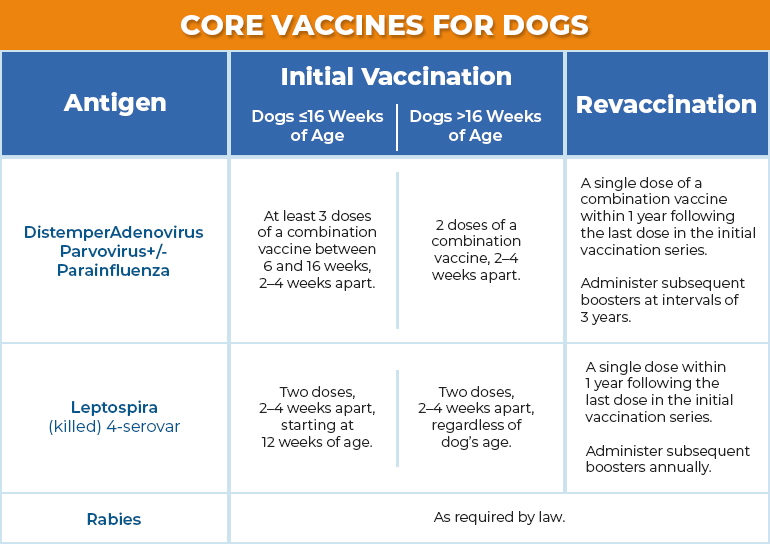
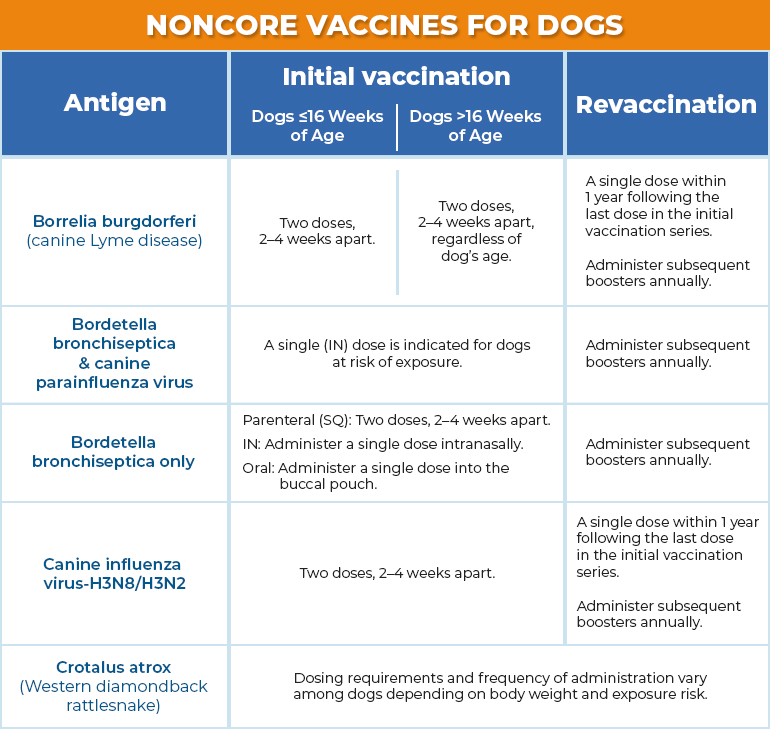
For dogs with overdue vaccinations or an unknown vaccine history, veterinarians generally advise proceeding with vaccination. For rabies specifically, vaccination must always comply with state and local laws, and you should consult with a veterinarian or relevant authorities for any queries.
Moreover, vaccination recommendations may vary based on your dog’s age, breed, lifestyle, health status, and local disease risks, so always follow your veterinarian’s advice.
Are Vaccines Safe for Dogs?
Yes, vaccines are generally considered a safe and effective way to protect your dog from various diseases. Although, side effects can occur in rare cases, the benefits of preventing severe, often fatal infections significantly outweigh the risks.
To ensure the safe administration of the vaccine to your dog, keep the following things in mind:
- Always consult a veterinarian to create an appropriate dog vaccine schedule tailored to your dog’s lifestyle and age.
- Keep your dog relaxed and calm during the vaccination process to reduce stress and discomfort.
- Watch out for any signs of reactions or discomfort for 24-48 hours after vaccination. Seek immediate veterinary care if you observe any of these signs:
- Vomiting
- Hives
- Diarrhea
- Coughing
- Itching
- Fever
- Facial swelling
Adverse reactions from vaccines can be life-threatening if ignored. If you’re concerned that an allergic reaction may occur, or if it’s your first time vaccinating your dog, you can wait at the vet’s clinic for 30–60 minutes before taking your dog home.
Final Thoughts
Vaccinations aren’t just another task on your pet parenting checklist. They’re one of the easiest ways to protect your dog for life. Stay consistent with your dog’s vaccination schedule and reach out to your vet for any concerns. Because at the end of the day, a few small shots now mean a healthier, happier life for your dog later.