
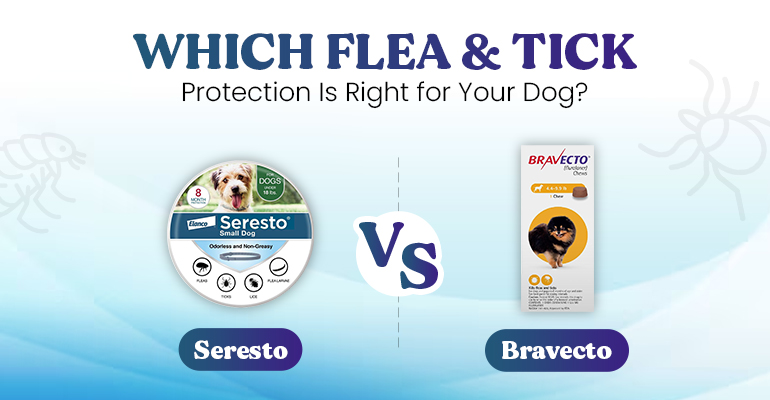
Seresto vs. Bravecto: Which Flea & Tick Protection Is Right for Your Dog?
Fleas and ticks aren’t just a nuisance. These tiny creatures pose a serious health risk for dogs. That’s why flea and tick treatments are non-negotiable for pet parents. Two of the most talked about flea and tick prevention treatments include Seresto and Bravecto. One is a long-lasting collar, and the other is an oral chew. Both are trusted and effective products, and both work very differently. So, which one is better for dogs? Let’s compare both the products to find the answer.
What is Seresto Collar for Dogs?
Seresto is a flea and tick collar that protects dogs from fleas and various types of ticks for up to 8 months. It releases low doses of active ingredients (flumethrin and imidacloprid) that spread across the dog’s skin and coat. It kills fleas and ticks on contact, meaning they don’t need to bite your dog to die.
This option is popular among pet parents who want something low maintenance. Put the collar on, check the fit occasionally, and that’s it. Seresto is also water-resistant, so normal bathing and swimming won’t reduce its effectiveness.
However, Seresto may not be the best choice for dogs with sensitive skin, as they may experience skin irritations. The Seresto Collar is indicated for dogs and puppies aged 7 weeks and older.
Why pet parents choose Seresto
- Long-term protection with one application
- Kills fleas and ticks on contact (no bite needed)
- No hassles of monthly administration
Things to consider
- Some dogs may get skin irritation around the neck
- Must be worn continuously to stay effective
What is Bravecto Chew for Dogs?
Highly regarded by pet parents and vets, Bravecto is a flavored, treat-like chewable treatment offering effective protection against fleas and ticks. It contains fluralaner as its active ingredient. Fluralaner reaches the tissue fluids under the dog’s skin after administration and kills the parasites as they feed.
Bravecto is a wonderful option for dogs who hate collars or spend a lot of time swimming. There’s nothing to fall off or get chewed by another pet. It’s also highly effective against multiple tick species, including those that transmit Lyme disease.
However, Bravecto isn’t recommended for every dog. Some dogs with a history of seizures or neurological issues may need a different option. Bravecto chew is indicated for dogs 6 months of age and older and weighing 4.4 pounds or greater.
Why pet parents choose Bravecto
- No collar to lose or chew
- Great for dogs that swim or bathe often
- Simple dosing every three months
Things to consider
- Fleas and ticks must bite to be killed
- Not for dogs with a history of seizures or neurological disorders
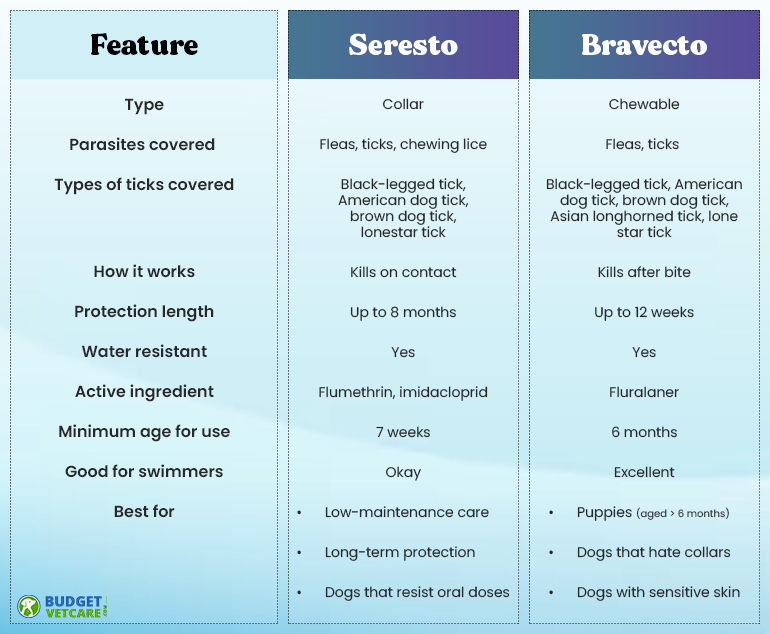
Seresto vs. Bravecto for Dogs: A Quick Comparison
The table below gives a clear comparison of both treatments:
Final Verdict
There’s nothing like a “winner” in the Seresto vs. Bravecto debate. Both products work effectively and are safe when used appropriately. The “better” option for your dog can depend on factors like your dog’s health history, lifestyle, preferences, and above all, your vet’s recommendation. When it comes to choosing an effective flea and tick treatment for your dog, avoid getting influenced by the trends and hypes and choose the one that truly fits your dog’s health needs.
Frequently Asked Questions
Does Bravecto kill fleas and ticks faster than Seresto?
Bravecto begins killing fleas within 2 hours after administration. On the other hand, Seresto kills existing fleas on dogs 24 hours after the initial application of the collar. After 24 hours, any new fleas on the dog are killed within 2 hours. Hence, both are equally fast-acting treatments.
How long does Seresto last compared to Bravecto?
Seresto is the longest-lasting flea and tick collar, offering up to 8 months of protection. Bravecto chew offers up to 3 months of effective protection against fleas and ticks.
Can Seresto and Bravecto be used together?
Seresto and Bravecto both work against the same parasites (fleas and ticks), and therefore it makes no sense to use them together. Although both products work differently and there are no known contradictions of using them together, typically it is not advisable to combine these two flea and tick treatments.



Pingback: prinzide
Pingback: lasix 40 mg tablet
Pingback: cheap antibiotics
Pingback: fluconazole over the counter uk
Pingback: sertraline hcl 25 mg
Pingback: cenforce for sale finland
Pingback: mesalamine headache reddit
Pingback: semaglutid köpa
Pingback: rogaine reviews male
Pingback: doxycycline effect on menstrual cycle
Pingback: minoxidil sperm reddit
Pingback: toradol how fast it works
Pingback: avanafil cost structure
Pingback: vardenafil time course
Pingback: Duration Variability Science
Pingback: Sildenafil vs Levitra 25 mg Onset
Pingback: the sildenafil resource
Pingback: sildenafil PK parameters
Pingback: what to know about metronidazole