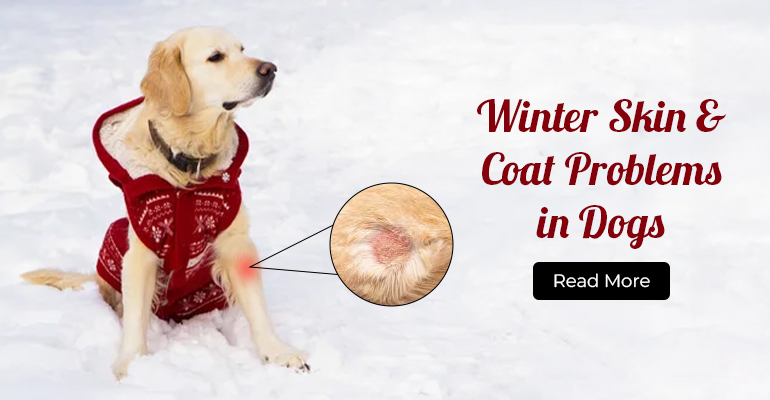
Winter Skin & Coat Problems in Dogs: Itchiness, Dryness & Parasitic Infestation
Winter can be really harsh on our dogs. From hypothermia and frostbite to dehydration and joint pain, there are a lot of health issues that canines tend to experience in winter. However, one health condition that most dogs experience in winter is skin and coat issues. The cold winds, low humidity, dry air and indoor heating in winter strip the natural moisture from dogs’ skin and coat and cause various skin issues like itching, flakiness, dandruff and dryness. If you’re new to dog parenthood and it’s your first winter with your pooch, don’t worry, as we’re here to help. In this blog, we will brief you on the possible skin issues that your pal may encounter this season, for you to remain on your toes. Let’s get started.
Winter Skin & Coat Problems in Dogs
Let’s take a quick glance at the common skin and coat problems that dogs face during winter.
1. Cold Air Causes Dry & Flaky Skin
Just like our skin, even our dogs’ skin experiences dryness and flakiness in winter due to the cold air and low humidity that strips moisture from their skin and coat. Dog breeds that have short fur are mostly susceptible to this issue and end up experiencing extremely dry and brittle skin. Indoor heating makes the condition worse by making the air very dry, which further triggers the skin problems.
2. Excessive Scratching & Licking Cause Hot Spot
Dogs tend to cause self-trauma by excessively scratching and licking themselves to subside skin irritation. However, it causes moist, infected skin lesions, highly vulnerable to bacterial infections known as hot spots.
3. Dry Air Leads to Intense Itching & Irritation
Dogs experience intense itching and irritation in their skin due to the dry air that weakens the protective lipid layer on their skin and coat. As a result, the canines are subjected to excessive scratching, face rubbing and paw licking.
4. Warm Indoors Trigger Parasite Infestations
Many pet parents assume that parasites cannot remain active during winter. But the truth is parasites like fleas, ticks and mites can survive all year round by concealing themselves in carpets, furniture and bedding. They become active when they get favorable warm temperatures inside your home and end up infesting your dog and subjecting them to scratching, hot spots and hair loss.
5. Exposure to Various Allergens Leads to Skin Allergies
Indoor heating and increased exposure to indoor allergens like dust, mites and molds subject a lot of dogs to suffer from severe skin allergies. The reactions cause immense scratching and infections in the affected part of the skin.
6. Seasonal Flank Alopecia Causes Bald Patches
Dogs tend to experience Seasonal Flank Alopecia in the winter, a condition where they lose fur on their body, leading to bald spots. However, bald spots can also be result of other underlying health conditions like poor nutrition, skin allergies and parasite infestations.
7. Skin Infections Caused by Various Microorganisms
Microorganisms like bacteria and fungi thrive when your dogs have dry and flaky skin, causing severe infection. Bacterial and yeast infection causes redness, inflammation, unwanted odor, hair loss and puss-filled bumps. Fungal infection, on the other hand, results in scaly, bald patches on your dog’s coat.
8. Extreme Dry Air Causes Cracked Paw Pads or Nose
The harsh, cold weather in winter and the dry air not only strips natural moisture from your dog’s skin but also impacts their healthy blood flow. This results in dry and brittle skin on your pooch’s nose and paw pads, leading to cracks.
Frequently Asked Questions
Q:1 What are the best shampoos to address itchiness in dogs during winter?
A: Some of the best shampoos for dogs to soothe itchiness during winter are Dermoscent ATOP 7 Shampoo, Dorwest Scent & Shine Shampoo, Dorwest Soothe & Calm Shampoo, Karbawash Shampoo and Dorwest Clean & Fresh Shampoo.
Q:2 Are there any health supplements that help dogs get relief from itchy skin during winter?
A: Dorwest Evening Primrose Oil Liquid is one of the effective health supplements to address itchy skin in dogs.
Q:3 Do dogs get itchy when their winter coat sheds out?
A: Dogs often get itchy when their winter coat sheds out. This happens due to loose fur irritating the skin along with the dry air from indoor heating that leads to dryness, flaky skin and dandruff.
Q:4 What time of year is worst for dog allergies?
A: Dogs suffer the most from allergic reactions during spring, summer and early fall, when pollens from trees, grasses and weeds trigger symptoms like scratching, itching, licking and chewing.
Bottom Line
Winter itch in dogs is one of the worst nightmares of a dog parent. But with the help of effective skin care essentials, proper hydration and the addition of a humidifier in your home, you will be easily able to manage their skin issues and ensure year-round healthy skin of your canine baby.
At BudgetVetCare, we carry a wide range of products to address skin problems in dogs at unbeatable prices. Check out our online store to enjoy lucrative offers on your preferred products.