
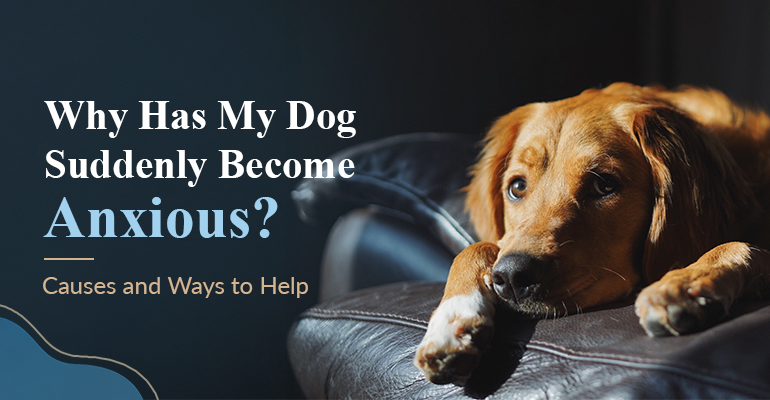
Why Has My Dog Suddenly Become Anxious? Causes and Ways to Help
A dog that used to handle thunderstorms, car rides, or being left alone without much fuss suddenly starts pacing or hiding, and the obvious question is what changed. When a dog that was previously comfortable suddenly becomes anxious, there can be many factors contributing to this situation. It is important to figure out the cause rather than just trying to calm your dog. In this blog, we will discuss the common triggers of anxiety in dogs, the signs to look for, and ways in which you can calm your dog.
What Are the Signs of Sudden Anxiety in Dogs?
Signs of sudden anxiety in dogs can vary from subtle changes in body language to more obvious behavioral changes. The behaviors associated with anxiety tend to be fairly recognizable once you know what to look for. Some common signs of anxiety include:
- Restlessness
- Panting unrelated to heat or exercise
- Tucking the tail
- Ears pulled down or back
- Licking lips
- Trembling
- Excessive vocalization
- Hiding
- Drooling
- Clinginess
- Destructive behavior
- House soiling
- Stress-induced diarrhea
- Aggressive behavior
None of these signs point to one specific cause on their own. The same behavior can show up whether the underlying driver is environmental, experiential, or medical, which is part of why the context around when and how the anxiety appears, matters so much.
Why Is My Dog Suddenly Anxious?
Changes in Routine
Dogs tend to build a sense of security around predictability, such as having the same walk schedule, the same people coming and going, and the same general routine for their day. When that day-to-day routine changes, even in ways that seem minor to a person, a dog can respond with developing anxiety.
Moving to a new home, having a different work schedule, introducing a new person or pet in the household, undergoing renovations, or even rearranging furniture can all disrupt the sense of familiarity your dog may have. This is not a flaw in the dog’s temperament; it is a fairly predictable response to disruption, and it often settles once the new routine slowly becomes familiar.
A Frightening Experience
Sometimes the cause is more identifiable: a single bad experience can shift a dog’s anxiety level and change how they respond to similar situations in the future.
For example, a frightening encounter with another animal, an injury, a loud and sudden noise, or even an unpleasant vet visit can all leave a lasting impression on your dog that you may not realize. This can be more common in rescue dogs or previously neglected animals, which may sometimes develop delayed anxiety responses when certain situations trigger memories of past mistreatment.
Noise Sensitivity
Noise sensitivity, in particular, is common in dogs. Common triggers may include thunderstorms, fireworks, loud vehicles, beeping appliances, and construction noise, all of which can make your dog fearful.
A dog that goes through a startling or distressing event does not necessarily “get over it” on its own timeline, and a new anxiety around similar situations afterward is a recognizable pattern rather than an overreaction.
Separation-Related Anxiety
If your schedule has shifted such that you may spend more time away from home, or there is a change in household members who used to be around during the day, a dog that previously tolerated time alone may start showing distress when left alone. This can appear suddenly even in dogs with no prior history of separation-related behavior, particularly if the change in routine was abrupt.
Pain or Underlying Illness
An underlying illness is one of the easiest causes to overlook. Pain and other health conditions may cause changes in a dog’s behavior. Pet parents can mistake pain-driven behavior changes for something else entirely, including normal aging.
A dog in pain from an injury or arthritis, or another underlying health condition, may become more anxious specifically because pain can make a dog more vulnerable to fear and stress responses. New anxiety that shows up alongside any change in mobility, appetite, or general demeanor is a reasonable prompt to consider a medical cause rather than a purely behavioral one.
Aging-Related Causes: Cognitive and Sensory Changes
Older dogs face two separate processes that can each produce new anxiety, and it is worth understanding that they are not the same thing. Canine cognitive dysfunction syndrome (CDS) is a recognized brain condition in senior dogs.
CDS can cause disorientation, altered sleep-wake cycles, anxiety, house soiling, restlessness, and activity changes. Senior dogs may also become more fearful or unsettled in situations they previously handled well.
Separately, declining hearing or vision can make a dog more anxious simply because the world has become less predictable to navigate. A dog that cannot hear someone approaching or see clearly in dim light may get startled more easily or cling more to a familiar person.
How Can I Calm My Suddenly Anxious Dog?
Unfortunately, just like in people, there is no immediate solution to manage anxiety. The right approach depends on what is causing anxiety. While you arrange veterinary care to identify the cause, you can do a few things to help your dog feel safer and reduce stress.
- Staying calm yourself, matters more than you think. Dogs pick up on tension in your voice and body language, so a steady presence helps.
- Giving your dog a quiet space to retreat to, such as a crate or a familiar corner, can help too, as long as it is offered rather than forced.
- Avoid restraining a dog that is trying to move away or hide.
- If the anxiety is tied to a specific trigger, do not repeatedly expose your dog to it in an attempt to make them “get used to it.”
- Desensitization and counter-conditioning can be useful, but they should be introduced gradually and appropriately, often with guidance from a veterinarian.
- For additional support, calming products such as Zylkene Calming Supplement for Dogs and Anxitane Chewable Tablets for Dogs may be considered as part of a broader approach to managing anxiety. Consult your veterinarian before using these products.
In the meantime, providing avenue for some mental enrichment or simply maintaining consistent routines can help alleviate restlessness. These are not guarantees, but they are good steps to take care of your dog for a healthier life. None of this replaces an actual diagnosis.
If the anxiety is severe, a veterinarian can recommend a proper plan, which may include professional behavior treatment and, in some cases, treatments managed directly by the vet.
Final Thoughts
A dog that suddenly becomes more anxious is responding to something: A change in their environment, a frightening experience, a shift in their daily routine or, often enough to take seriously, an underlying health issue that has not been identified yet. Sudden anxiety is a signal that something has changed, and identifying what that something is tends to lead to a far more useful answer and actions than trying to address the anxiety on its own.


