
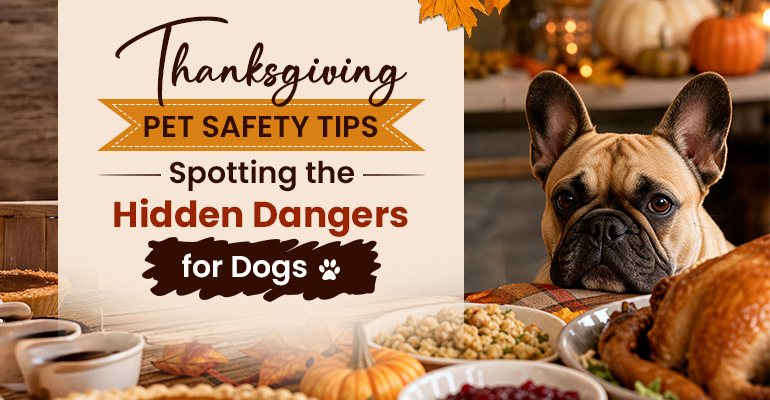
Thanksgiving is a holiday most of us look forward to all year, but it isn’t exactly a day off from pet-parent duty. Turkey is roasting, the trash is overflowing, and there is colorful décor. For a curious pet, all of these can add up to opportunities for accidental exposure or injury. A little planning can help keep your dog safe while still allowing them to be part of your Thanksgiving celebrations this year.
What Makes Thanksgiving Dangerous for Dogs?
Thanksgiving can bring several potential hazards together at once. From unfamiliar ingredients and food scraps to decorations and open doors, there are many things that may be a normal part of our celebration but can pose risks to pets.
Fatty foods such as turkey skin, gravy, butter, and drippings can cause vomiting or diarrhea and, in some dogs, pancreatitis. Cooked turkey bones are a concern because they can splinter or cause choking, intestinal blockages, or injuries. Your kitchen trash can also become a buffet of dangerous leftovers for dogs.
A pet-loving guest may slip your dog a bite of their food without realizing it contains onion, garlic, raisins, or other unsafe ingredients for dogs. Gift boxes, candles, wrappers, electrical cords, bouquets of flowers that are toxic to dogs, and other personal items of your guests can attract these curious noses.
Keep pets away from the kitchen while food is being prepared, secure the trash, and ask guests not to feed your dog unless you’ve approved the treat.
Which Thanksgiving Foods Are Unsafe for Dogs?
Not every Thanksgiving food is toxic, but many of them are unsafe because of their ingredients, fat content or how they are prepared. Keep these foods away from dogs:
- Onions, garlic and chives: Common in stuffing, gravy, casseroles, and seasoning blends, these Allium vegetables can damage red blood cells and cause anemia. Many Thanksgiving delicacies may contain these ingredients.
- Turkey bones, skin and fatty scraps: Bones can choke or injure the digestive tract, while fatty skin and scraps can trigger gastrointestinal upset in some dogs.
- Grapes and raisins: These can affect kidney function in dogs. Keep grapes, raisins, or products containing them, such as chocolates and cakes, out of your pet’s reach.
- Chocolates: Chocolates may contain theobromine and caffeine, which can cause vomiting, abnormal heart rhythms, tremors, or potentially life-threatening poisoning.
- Xylitol: This sweetener can cause dangerously low blood sugar and potentially liver damage. Check the product label of sugar-free candies, baked goods, and other products for xylitol.
- Alcohol and raw yeast dough: Alcohol can be toxic to dogs, while raw yeast dough can ferment inside the stomach and produce alcohol that can be poisonous. Always store liquor and yeast dough in a secure place.
If you want to share some Thanksgiving turkey with your dog, offer them plain, cooked, boneless, and skinless turkey meat in small amounts. Ensure that it is unseasoned and is offered as a treat, not as a replacement for a healthy and balanced diet.
What Should You Do If Your Dog Eats Something Dangerous?
If your dog has eaten something that can be potentially unsafe for them, do not panic; act promptly. But don’t wait for symptoms before seeking advice if you suspect the food may be toxic.
Remove food items within your dog’s reach and try to determine what they ate, approximately how much, and when. Keep the packaging or ingredient list handy if available, and call your veterinarian or an animal poison-control service promptly for guidance.
Do not induce vomiting unless a veterinarian or veterinary poison expert specifically directs you to. While seeking professional guidance, monitor your dog for signs such as vomiting, diarrhea, excessive thirst, weakness, unusual behavior, tremors, difficulty walking, seizures, abdominal pain, or collapse. Some toxic exposures may not show obvious symptoms immediately.
If your veterinarian diagnoses vomiting or diarrhea associated with stomach upset, they may recommend supportive care. Digestive supplements like Dorwest Digestive Tablets for Dogs and Cats may be beneficial in some cases. However, if you suspect poisoning, do not give a digestive supplement; consult your veterinarian and follow their recommendations.
How to Create a Safe Space for Your Dog on Thanksgiving?
Your dog doesn’t have to spend Thanksgiving in a restricted area. Consider the following to keep them safe when the house gets noisy or crowded:
- Safe space: Set up a quiet room, crate, or gated area with their bed, fresh water, familiar toys and a dog-safe treat or food puzzle.
- Enough exercise: Take your dog for a walk and provide appropriate exercise before guests arrive to give them an appropriate outlet for their energy.
- Balanced meals: Offer their regular pet food or a small portion of veterinarian-approved foods such as plain turkey, cooked sweet potato, or green beans.
- Secure exits: Keep doors secure, especially when guests are entering and leaving, and make sure your dog’s microchip registration and contact information are up to date.
- Calming aids: Sometimes guests and festive activities can make dogs nervous. Anxiety supplements such as Zylkene Calming Supplement for Dogs may be considered for dogs that become stressed by changes in their environment. Ask your veterinarian whether your dog needs a calming supplement.
A few simple boundaries can prevent a holiday emergency.
Happy & Safe Thanksgiving!
Thanksgiving doesn’t have to mean choosing between a great celebration and your dog’s safety. Keep toxic foods out of reach, secure the trash, give your dog a calm retreat, and make sure everyone knows the house rules. Because the best Thanksgiving memory is one where everyone, including your four-legged family member, is happy, healthy, and home for the extended celebrations.