
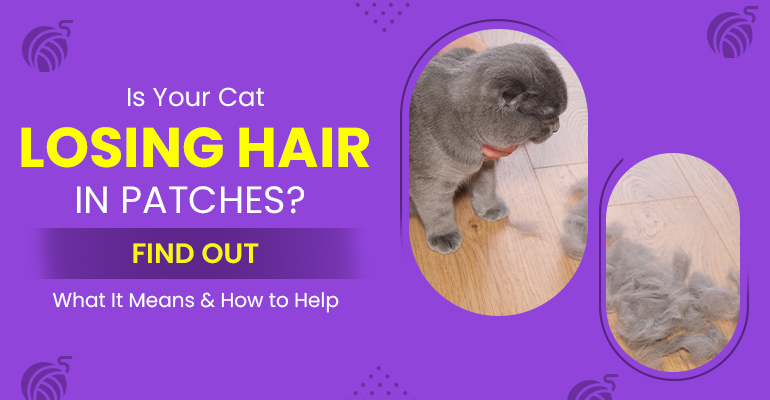
Noticing your cat losing hair in patches can be a scary moment. You may wonder that this definitely doesn’t seem to be the normal hair shedding, so what is it? Is it something serious? The short answer is yes. Cats don’t usually lose hair in patches without a reason. It’s often a sign that something is going wrong underneath.
Ranging from something simple like fleas to more complex health or stress-related issues, cat hair loss can occur for many different reasons, and identifying its exact cause may take some expertise. Find out why cats lose hair in patches and how to treat and prevent this condition.
Cat Hair Loss in Patches: What it Means?
Cat hair loss or alopecia is a medical condition in which cats lose thick tufts of hair in various locations on their bodies. However, alopecia doesn’t always lead to bald spots on cats. It can show up in various ways:
- Patchy hair loss
- Localized bald spots
- Complete hair loss
Alopecia in cats isn’t the problem, it’s the clue. Meaning, it is a symptom of an underlying problem, not the disease itself. Your job is to figure out why it is happening and take appropriate steps to treat it before things get complicated.
5 Common Causes of Hair Loss in Cats
Let’s get into the top reasons your cat might be losing fur.
1. Parasitic infestations
Parasites are the most common reason for hair loss. Fleas, ticks, or mites can trigger major hair loss through irritation. Addressing a parasitic problem quickly can decrease the severity of the condition.
2. Allergies
Yes, cats can get allergies too. Whether it is triggered by food, environment, or flea bites, allergies can often lead to itching, licking, and bald patches, especially near the thighs, back, and belly.
3. Stress
You may find this surprising, but cats can lose hair due to stress. They tend to overgroom and lick their fur when stressed, anxious, or even bored. It generally occurs due to environmental changes, such as moving into a new home or introducing a new pet.
4. Skin infections
Skin infections caused by bacteria, yeast, or fungi like ringworm may cause hair loss. When the skin becomes irritated or infected, it often leads to excessive scratching or licking. Early treatment is key to preventing further discomfort.
5. Other medical conditions
Although less common, underlying health issues like thyroid imbalances or Cushing’s disease can affect your cat’s skin and coat health. Injuries may cause your cat to lick off specific areas. Additionally, nutritional deficiencies can weaken the fur, making it more prone to shedding or thinning.
Signs You Should Not Ignore if Your Cat is Losing Hair
If you notice any of these symptoms, it means it’s time to stop Googling and call your vet:
- Red, inflamed, or bleeding skin
- Open sores or scabs
- Sudden or rapidly spreading bald patches
- Constant scratching or licking
- Behavior changes (hiding, aggression, low energy)
How Veterinarians Diagnose Alopecia in Cats?
If you visit a vet for your cat’s alopecia, here’s what usually happens:
- Physical examination
- Flea & tick check
- Skin scraping (to check for mites)
- Fungal culture (for ringworm)
- Allergy testing
- Blood tests (to rule out internal issues)
- Urine tests (to rule out bacteria or glucose)
These examinations aren’t as scary as they sound. Most of the methods are simple and minimally invasive.
What are the Treatment Options for Cat Hair Loss?
Your cat’s alopecia treatment can entirely depend on the root cause:
- If parasites are the cause of your cat’s hair loss, a veterinarian may recommend flea and tick treatments, mite treatments, antibiotics, or antifungal treatments.
- If allergens are the reason for your cat’s hair loss, hypoallergenic diets, antihistamines, or prescription treatments may be required.
- For alopecia arising out of stress or behavioral issues, enrichment techniques, anxiety treatments, or pheromone diffusers may be helpful.
- If the hair loss is caused by nutritional deficiencies, a veterinarian can recommend nutritional supplements and skin and coat supplements for cats.
Is it Possible to Prevent Hair Loss in Cats?
Yes, it is possible to prevent hair loss in cats by aiming to prevent its possible causes. Here’s what may help:
- Regular vet check-ups: Taking your cat for a veterinary checkup regularly can help detect possible causes like food allergies, parasite infections, thyroid imbalances, etc., early on.
- High-quality diet: Feeding your cat a balanced and nutrient-rich diet that promotes skin and coat health and strengthens their immunity can greatly help prevent conditions like alopecia.
- Skin care & grooming: Regular grooming using trusted cat grooming products like shampoos and conditioners helps remove loose hair, dirt, and dandruff while also allowing you to spot early signs of skin issues.
- Year-round cat parasite control: Using prevention treatments or using Bob Martin Clear Ticks & Fleas Shampoo For Cats & Kittens regularly helps prevent parasites that cause irritation and itching and contribute to hair loss.
- Stress-free environment: Providing a calm and stable environment plays a big role in preventing stress-related hair loss. Try to minimize sudden changes in your cat’s surroundings and create safe spaces where they can relax.
- Daily play and stimulation: Regular playtime keeps your cat mentally and physically engaged. Interactive toys and dedicated play sessions can go a long way in maintaining your cat’s overall well-being and preventing stress-induced hair loss.
Lastly,
Always remember: patchy hair loss in cats is not normal shedding. It’s usually caused by underlying health problems like parasites, allergies, or stress that must be addressed at the earliest. Your cat losing its beautiful fur is surely heartbreaking, but thankfully most cases are treatable with the right care and treatment. Early action makes the treatment easier (and cheaper), so never hesitate to fix an appointment with your veterinarian right away if you spot something weird.