
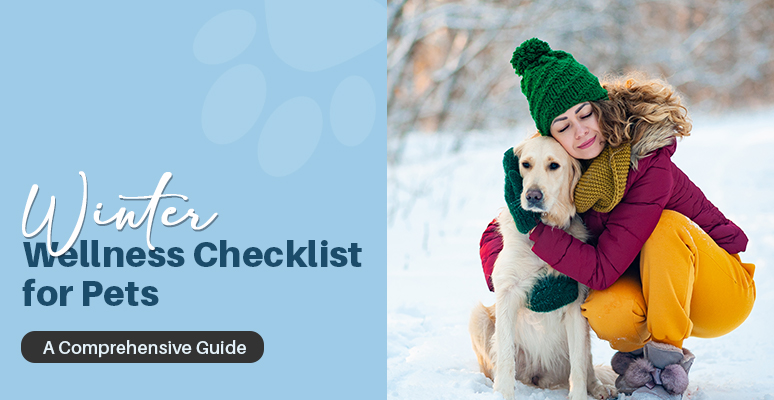
As the temperature starts to drop and the snow blankets the ground, we get excited for the upcoming festive season, but it’s not the same for our furry friends. For them, the chilly winds bring along a range of challenges beyond just feeling cold. From frostbite and hypothermia to toxic road salt and dangerous antifreeze, pet parents need to prepare for various health dangers.
In this blog, we’ll discuss a comprehensive winter safety checklist to help protect your pet from winter hazards. We’ll cover practical tips and preventive measures to ensure your furry companions stay healthy, comfortable, and safe throughout the cold months.
Let’s dive right in!
Essential Winter Safety Measures for Pets
Here, we’ll discuss the various measures you can take to protect your beloved pet during winter.
#1 Keep them warm and dry
It goes without saying that extended exposure to the cold weather can put your pet at risk of dangerous conditions such as frostbite or hypothermia. So keep them indoors and comfortable with warm bedding, and bundle them up with a jacket, coat, or sweater, especially smaller dogs and dogs with thin coats. Moreover, be aware of the common symptoms of these conditions to get your pet the help they need on time.
#2 Limit outdoor time
As much as you would want, you can’t keep your pet indoors the entire winter, right? So, manage the outdoor time wisely. When going out, mind the snow and keep the trips brief. Plus, make sure your pet is blanketed up, leashed, and chipped.
#3 Watch out for winter chemical hazards
The winter winds bring along several hidden hazards in the form of ice-melting chemicals like road salt that can irritate your pet’s paws and can be toxic if ingested. Therefore, wipe their paws every time you come from outside and have your pet wear booties or traction socks.
#4 Handle antifreeze carefully
Antifreeze, although an essential for winter, can be extremely dangerous for pets. It tastes sweet and is toxic in nature, and even a small amount can be fatal. So, store it securely, wipe up the spills immediately, and opt for the pet-safe antifreeze option when possible.
#5 Groom them regularly
Well, grooming is essential regardless of the season, but in winter a clean and well-maintained coat is especially necessary for better insulation. It also helps maintain skin and coat health, preventing itchiness, flaking, and discomfort. Trim the fur around their paws and nails to prevent ice buildup. Along with this, massage petroleum jelly or paw balms to protect against cracking and dryness.
#6 Watch their weight
Winter simply means less activity for pets, leading to weight gain, which can be problematic if not monitored. Therefore, you need to strike a balance because overfeeding can lead to obesity, and underfeeding may leave them with less energy to keep themselves warm. It’s best to consult your vet and get a tailored diet plan for your pet.
#7 Ensure parasite protection
Don’t let the myth that fleas and ticks are not active during winter fool you. These parasites can survive in winter and still pose a threat to your pet. So continue your pet’s year-round flea and tick prevention to avoid infestations and diseases.
#8 Provide joint support
Cold weather can aggravate signs of arthritis and joint pain, especially in older pets. Provide extra assistance with soft bedding, ramps to access higher platforms, non-slip mats, etc. Introduce joint care supplements into their diet to help them get the much-needed support. You can also rely on vet-approved therapies and massages to help manage joint pain.
#9 Respiratory issues
Just like us, during winters pets also have to deal with a variety of respiratory problems. Exposure to outdoor chill can trigger coughing and breathing difficulties. To prevent such issues, avoid exposing them to sudden temperature changes and use humidifiers indoors to help them stay warm and comfortable. Certain short-nosed breeds like pugs and bulldogs are highly prone to breathing difficulties in winters and require additional care.
#10 Keep them hydrated
Dehydration is more common in winters than you can imagine, as pets typically tend to drink less water in the cold weather. This can be a worrisome condition and should not be ignored. So make sure your pet has access to fresh drinking water at all times. Try creative ways such as introducing wet food or arranging games around food & drinking water to ensure they take adequate fluids.
The Bottom Line
Winter is a beautiful season with sweet anticipation of the festive season, but you cannot ignore your pet’s misery during the cold months. So keep your guard up, stay vigilant, and follow the preventive measures discussed in this blog to help your pet navigate the winter comfortably. Good luck!